ThaiFusion Botanica
Philodendron Longilobatum Lelano Miyano Variegated
Couldn't load pickup availability
A Brazilian Species, Not a Thai Hybrid
Philodendron longilobatum is a real, described species native to Espírito Santo in Brazil, in the arum family Araceae. Unlike most of the trade-named hybrids in this catalog, it isn't a modern Thai cross; the species itself has a verifiable native range, distinct from the informally bred selections sold alongside it here.
Cream and Yellow Streaked Through Long, Narrow Leaves
This variegated form carries irregular cream-to-yellow streaking and sectoring across the elongated, narrow-lobed leaves the species is named for (longilobatum meaning long-lobed). The variegation shows up as broad marbled patches on some leaves and finer streaking on others, consistent across both the tissue culture plantlet and the adult plant sample shown here.
An Unverified Selection Name on a Verified Species
"Lelano Miyano" reads as a grower or collector name attached to this particular variegated line rather than a registered cultivar, the same pattern as many named selections in the trade. What's confidently verified is the species and the variegation visible in this plant's own photos.
Partial Shade, Not Full Sun
Give it bright, partial shade rather than direct sun, which can scorch the lighter, chlorophyll-poor sections of the leaf. Water moderately, letting the top layer of the mix dry out between waterings rather than keeping it constantly wet, and provide a loose, well-draining mix with warm, humid conditions. As a tropical species with no frost tolerance, it isn't a plant to leave outdoors through anything but the warmest, most consistently tropical climates.
A Genetic Clone From a Sterile Lab Pack
This plantlet ships as a sterile tissue culture pack in nutrient gel, a direct genetic clone of the parent plant's variegation rather than a seed-grown guess. It's a lower-cost, lower-risk way to start a verified Brazilian Philodendron species with stable variegation than sourcing an adult import, and like other tissue culture plantlets here, it will take time to grow into the fuller look shown in the adult sample photo.
Shipping
Shipping
We ship our plants with free Phytosanitary Certificate via the national postal services, Dragon Courier and courier companies such as DHL and UPS. Some countries require an import permit.
Please refer to our Delivery & Packaging page for more details. We do not ship on public holidays in the Kingdom of Thailand.
Packaging
Packaging
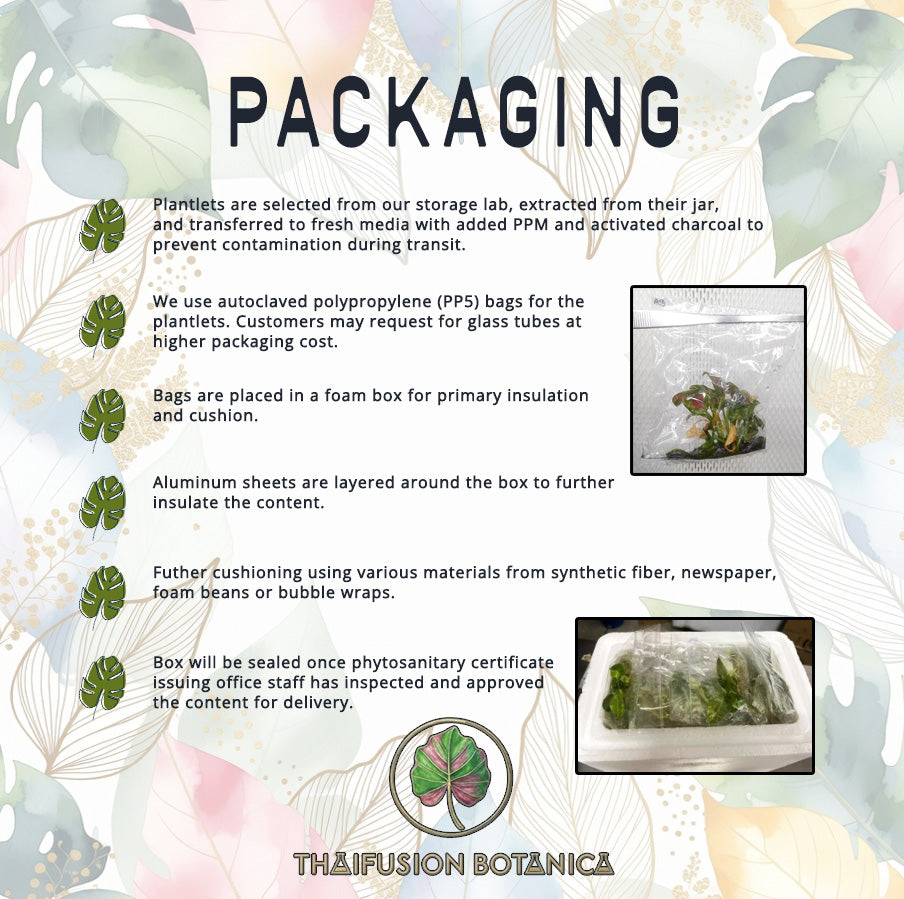
We ship our tissue culture plants in foam box lined with insulating material to minimize thermal shock.
Live plants are shipped in carton boxes with ventilation holes to prevent excessive moisture from building inside the parcel.
Please refer to our Delivery & Packaging page for more details. We do not recommend importing live plants if your area experiences temperature below -5 degree Celsius.
Disclaimer
Disclaimer
Our photos are representative examples of the plants we offer. You will receive a healthy plant of similar size and quality unless the product description clearly states that the listing is for the exact plant shown.
For selected products, actual photos of the individual plant are provided. These listings will be clearly identified, and you will receive the exact plant pictured. The date the photos were taken will also be stated. If the photos are older, you are welcome to contact us to request updated images before purchasing.
Tissue culture plants are young plants and may not yet display their full mature characteristics. In variegated cultivars, variegation often becomes more pronounced as the plant matures under suitable growing conditions. However, the amount and pattern of variegation naturally varies from plant to plant and cannot be guaranteed.
Decorative pots and accessories shown in product photos are for display purposes only and are not included unless otherwise stated.
As our plants are living products, natural variation should be expected. Differences in size, leaf count, coloration, variegation, veining, and growth habit may occur depending on the season, age of the plant, environmental conditions, and normal biological variation. These natural differences are not considered defects and are not grounds for complaints, returns, or refunds.
All sales are final once plants have been shipped. Refunds or replacements for plants that arrive dead on arrival (DOA) are available only when the conditions outlined in our Returns, Refunds & Replacement Policy have been met. Please refer to that policy for full details.
Share

Plant Care
-
Light
Philodendrons grow best in bright, indirect light. Most varieties tolerate medium light, making them excellent houseplants, but brighter conditions encourage faster growth, larger leaves, and more vibrant colours. Avoid prolonged direct afternoon sun, which can scorch the foliage, especially on variegated varieties.
-
Temperature
Philodendrons thrive in temperatures between 18–29°C (65–85°F). Protect them from cold drafts and temperatures below 13°C (55°F), as prolonged cold can slow growth and damage leaves. Warm, stable conditions promote healthy year-round growth.
-
Water
Water when the top 2–5 cm (1–2 inches) of soil feels dry. Water thoroughly until excess drains from the pot, then allow the soil to partially dry before watering again. Reduce watering during cooler months when growth naturally slows.
-
Humidity
Philodendrons prefer 50–70% humidity, although many varieties adapt well to average indoor humidity. Higher humidity encourages larger leaves, stronger growth, and healthier foliage, particularly for tropical climbing species and velvety-leaved varieties.
-
Potting Mix
Use a chunky, well-draining aroid potting mix that provides excellent airflow around the roots. A mix of premium potting soil, orchid bark, perlite or pumice, and coco coir is ideal. Good drainage helps prevent root rot while retaining enough moisture for healthy growth.
-
Fertilizer
Feed Philodendrons with a balanced liquid fertiliser every 2–4 weeks during spring and summer, or apply a slow-release fertiliser according to the manufacturer's directions. Reduce or stop feeding during autumn and winter when active growth slows.