ThaiFusion Botanica
Musa Florida Tissue Culture
Couldn't load pickup availability
Musa Florida arrives from tissue culture as a small plantlet, but the leaves it's already putting out show exactly what makes this banana worth growing: a bold white pinstripe running down a field of green, with the two colours breaking unevenly along each blade rather than settling into a fixed ratio. Even at this early stage, the petiole base carries a faint pink blush, a preview of the more pronounced pink ridging this variegated banana develops as it matures.
A Banana Line With Its Own Royal Legend
Musa Florida is also sold under the name Hawaiian 'Ae'ae banana, and the two names may in fact describe the same variegated line; sources disagree on whether they're identical or simply closely related selections. What's better documented is the plant's backstory: this white-striped banana likely originated somewhere in Southeast Asia before becoming established and widely propagated in Hawaii, where, according to local tradition, it was once grown exclusively for Hawaiian royalty. Whether or not that specific claim traces to a documented source, it reflects how long this variegation has been valued and deliberately propagated rather than treated as a passing novelty.
Variegation That Reaches the Fruit Itself
Most variegated plants confine their colour break to the leaf, but Musa Florida carries it further. The white striping extends down into the petioles, which develop a pink-ridged blush as the plant matures, and it shows up again on the fruit itself: unripe bananas from this cultivar emerge with the same white-and-green striping before it gradually fades to solid yellow as the fruit ripens. It's a genuinely unusual trait for an ornamental banana, and one more reason collectors treat this as more than a foliage plant.
Not the Full-Sun Banana You'd Expect
Most bananas are grown in full sun without a second thought, but Musa Florida's variegation makes that a liability rather than an advantage. The white leaf tissue carries no chlorophyll, so it can't dissipate heat the way the green portions can, and harsh direct sun will scorch it. Light shade, with shelter from strong wind to protect the broad leaves, suits this plant better. Keeping the soil on the acidic side (an occasional addition of pine bark, peat moss, or a little granulated sulfur helps) is also worth doing deliberately, since the variegation tends to hold better in acidic soil than in neutral or alkaline conditions.
A Tissue-Cultured Start to an Heirloom Line
This plantlet is produced through tissue culture, propagated in a sterile lab environment from verified parent stock rather than grown from field-collected suckers. That means a genetically identical clone of the parent plant, free of the pests and soil-borne disease that can travel with a traditional rhizome division, arriving as a small rooted plantlet ready to pot on and grow into the striped, pink-ridged banana this cultivar is known for as it matures. For a plant with this much documented history behind it, tissue culture is a clean, reliable way to start.
Unlike most aroids, Musa is non-toxic to pets, worth knowing if the plant will eventually share space with a curious cat or dog. Add Musa Florida to your collection and grow a banana with a genuinely storied variegation, cultivated by ThaiFusion Botanica in Thailand and shipped as a tissue culture plantlet ready to establish.
Shipping
Shipping
We ship our plants with free Phytosanitary Certificate via the national postal services, Dragon Courier and courier companies such as DHL and UPS. Some countries require an import permit.
Please refer to our Delivery & Packaging page for more details. We do not ship on public holidays in the Kingdom of Thailand.
Packaging
Packaging
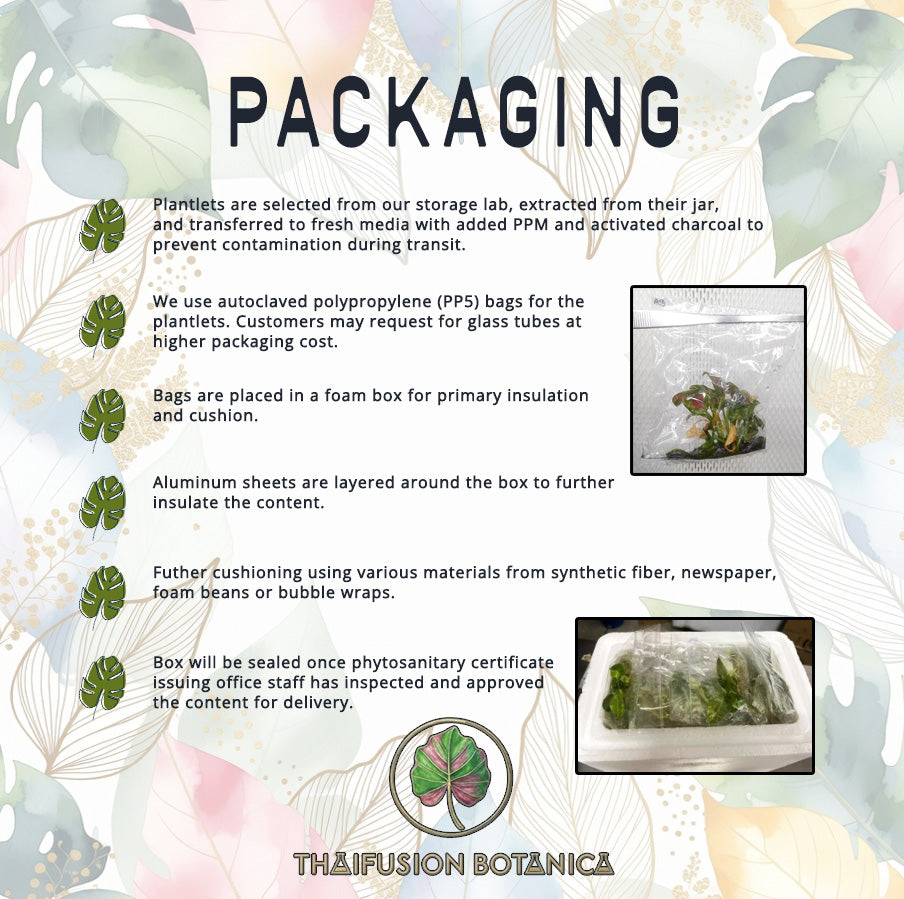
We ship our tissue culture plants in foam box lined with insulating material to minimize thermal shock.
Live plants are shipped in carton boxes with ventilation holes to prevent excessive moisture from building inside the parcel.
Please refer to our Delivery & Packaging page for more details. We do not recommend importing live plants if your area experiences temperature below -5 degree Celsius.
Disclaimer
Disclaimer
Our photos are representative examples of the plants we offer. You will receive a healthy plant of similar size and quality unless the product description clearly states that the listing is for the exact plant shown.
For selected products, actual photos of the individual plant are provided. These listings will be clearly identified, and you will receive the exact plant pictured. The date the photos were taken will also be stated. If the photos are older, you are welcome to contact us to request updated images before purchasing.
Tissue culture plants are young plants and may not yet display their full mature characteristics. In variegated cultivars, variegation often becomes more pronounced as the plant matures under suitable growing conditions. However, the amount and pattern of variegation naturally varies from plant to plant and cannot be guaranteed.
Decorative pots and accessories shown in product photos are for display purposes only and are not included unless otherwise stated.
As our plants are living products, natural variation should be expected. Differences in size, leaf count, coloration, variegation, veining, and growth habit may occur depending on the season, age of the plant, environmental conditions, and normal biological variation. These natural differences are not considered defects and are not grounds for complaints, returns, or refunds.
All sales are final once plants have been shipped. Refunds or replacements for plants that arrive dead on arrival (DOA) are available only when the conditions outlined in our Returns, Refunds & Replacement Policy have been met. Please refer to that policy for full details.
Share

Plant Care
-
Light
Musa (banana plants) grow best in full sun to bright, direct light. Outdoor plants thrive with at least 6–8 hours of sunlight daily, while indoor specimens should be placed in the brightest location available. Adequate light promotes strong growth and large, healthy leaves.
-
Temperature
Musa are tropical plants that prefer temperatures between 20–35°C (68–95°F). Growth slows below 15°C (59°F), and most ornamental banana plants should be protected from frost. Warm, humid conditions encourage rapid growth.
-
Water
Banana plants are heavy water users and prefer consistently moist soil. Water deeply whenever the top few centimetres of soil begin to dry, especially during hot weather. Avoid waterlogged soil, as poor drainage can lead to root rot. Reduce watering during cooler months when growth slows.
-
Humidity
Musa thrive in moderate to high humidity (50–70% or higher). Higher humidity helps prevent leaf edges from browning and supports lush tropical growth. Outdoor plants generally receive sufficient humidity in warm climates, while indoor plants may benefit from occasional misting or a humidifier.
-
Potting Mix
Plant Musa in a rich, well-draining potting mix that retains moisture while allowing excess water to drain freely. A blend of premium potting soil, compost, coco coir, and perlite provides the nutrients and drainage needed for vigorous root development.
-
Fertilizer
Musa are heavy feeders and benefit from regular fertilising throughout the growing season. Apply a balanced liquid fertiliser every 1–2 weeks, or use a slow-release fertiliser according to the label. Regular feeding supports rapid growth, large foliage, and healthy plants.