The mature foliage of Monstera deliciosa 'Devil Monster' immediately commands attention with its dramatic architecture. Large, rich green leaves are deeply divided by elongated fenestrations and broad inner perforations, creating the bold silhouette that has made Monsteras among the world's most admired tropical foliage plants. As the plant matures, each successive leaf develops increased variegation, producing an impressive display that transforms any indoor collection into a lush tropical setting.
This product is offered as a tissue culture plantlet, giving collectors the opportunity to raise this remarkable Monstera from its earliest stage while enjoying the satisfaction of watching it develop into the mature specimen shown in the reference photograph.
Why Collectors Love It
Collectors appreciate Monstera deliciosa 'Devil Monster' for its impressive and unique foliage and vigorous climbing habit. The dramatic fenestrations are more than simply ornamental; they create striking depth and movement within the foliage while allowing light and air to pass through the canopy, a natural adaptation that has fascinated botanists for generations.
The trade name 'Devil Monster' is widely used within the collector community to describe this distinctive selection. It has become popular among enthusiasts seeking Monsteras with exceptionally bold mature foliage and strong architectural presence.
Whether grown as a statement indoor plant, trained up a moss pole, or incorporated into a larger tropical collection, it develops into an elegant specimen that rewards patience with increasingly impressive leaves over time.
Botanical Background
Monstera deliciosa belongs to the Araceae family alongside Philodendron, Anthurium, and Alocasia. Native to the tropical rainforests of southern Mexico and Central America, it grows naturally as a hemi-epiphyte, beginning life on the forest floor before climbing trees in search of brighter light. This climbing habit enables mature plants to produce the large, deeply fenestrated leaves for which the species is celebrated.
One of the lesser-known characteristics of Monstera deliciosa is that its leaf perforations are believed to improve resilience in the rainforest environment by allowing strong winds and heavy tropical rainfall to pass through the foliage with less resistance. This adaptation helps protect the large leaves while maintaining efficient light capture beneath the forest canopy.
As with many collector selections, the trade name 'Devil Monster' is used horticulturally rather than botanically. Verified information relates to the species itself, while the mature plant shown illustrates the distinctive foliage that growers can expect as the plant develops.
Growing Information
Like most Monsteras, Monstera deliciosa 'Devil Monster' grows best in bright, indirect light where it can produce vigorous foliage without excessive sun exposure. A well-draining, airy growing medium helps maintain healthy roots, while watering once the upper layer of the substrate begins to dry encourages steady growth. Warm temperatures, moderate to high humidity, and a sturdy climbing support such as a moss pole or plank will encourage larger leaves and increasingly dramatic fenestrations as the plant matures.
Although capable of becoming an impressive climbing plant, it adapts exceptionally well as an indoor tropical houseplant when provided with consistent care.
Tissue Culture Plantlet
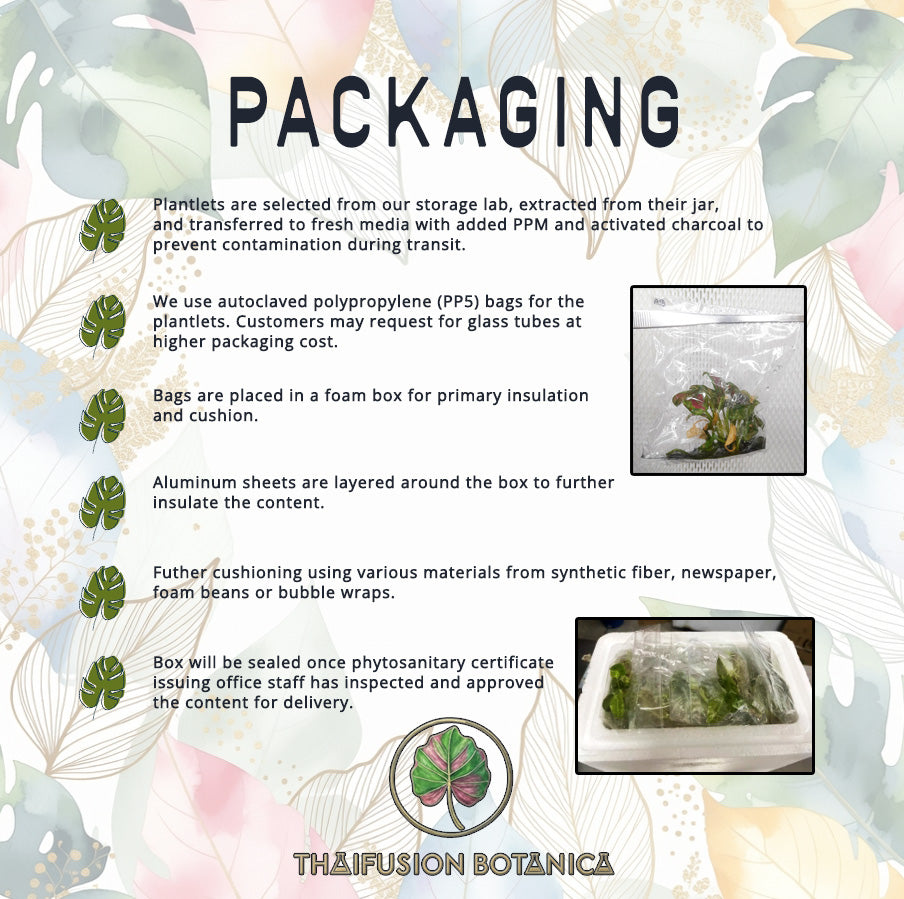
This product is supplied as a tissue culture plantlet, propagated under sterile laboratory conditions to produce healthy, vigorous young plants. Tissue culture propagation allows large numbers of genetically consistent plants to be produced efficiently while reducing the risk of pests and many common diseases associated with conventional propagation.
Growing a tissue culture plantlet offers a rewarding experience for collectors, allowing you to observe every stage of development from a young laboratory-grown plant to a mature climbing specimen. The photograph provided shows the plant's mature appearance, illustrating the remarkable foliage that develops with proper care and patience.
As a specialist tropical plant nursery in Thailand, ThaiFusion Botanica is committed to producing premium tissue culture plantlets that provide collectors, nurseries, and resellers with healthy starting material for long-term success.
Bring This Exceptional Monstera Into Your Collection
Few tropical foliage plants combine such dramatic architectural form with timeless appeal. Whether you are an experienced Monstera collector, expanding your indoor jungle, or sourcing premium tissue culture stock for future cultivation, Monstera deliciosa 'Devil Monster' Tissue Culture Plantlet offers the opportunity to grow an extraordinary specimen from the very beginning. Add this remarkable collector plant to your collection today and enjoy watching its iconic foliage unfold over the years with ThaiFusion Botanica.